Rajiv Gandhi the Dynamic Leader

Import Substitution and indigenous Manufacturing got the first big boost due to the Economic Reforms of Rajiv Gandhi. Made in India was born.

The Make in India dream of Vivekananda began to materialize; many joint ventures and healthy collaborations created employment and skill development

It was a phase of Phenomenal National development without jeopardizing National Security or exposing our Financial Infrastructure.

Rajiv Gandhi – Rajiv Gandhi Foundation

Books, video, audio, and other resources about Shri Rajiv Gandhi, 6th Prime Minister of India. From the Rajiv Gandhi Foundation.

Pandit Jawaharlal Nehru

Jawaharlal Nehru promoted parliamentary democracy, secularism, science and technology during the 1950s; powerfully influencing India as a modern nation. In international affairs, he steered India clear of the two blocs of the Cold War.

Nehru with members of the Interim government faction leaving Viceroy’s House after swearing in on 2 September 1946

India an Ancient Secular Democracy

India an Ancient Secular Democracy

Books of Pandit Jawaharlal Nehru

Manmohan Singh of INC

Manmohan Singh born 26 September 1932 is an Indian retired politician, economist, academician and bureaucrat who served as the 13th Prime Minister of India from 2004 to 2014.

A member of the Indian National Congress, Singh was the first Sikh prime minister of India. He was also the first prime minister since Jawaharlal Nehru to be re-elected after completing a full five-year term. He is the third longest-serving prime minister after Jawaharlal Nehru and Indira Gandhi.

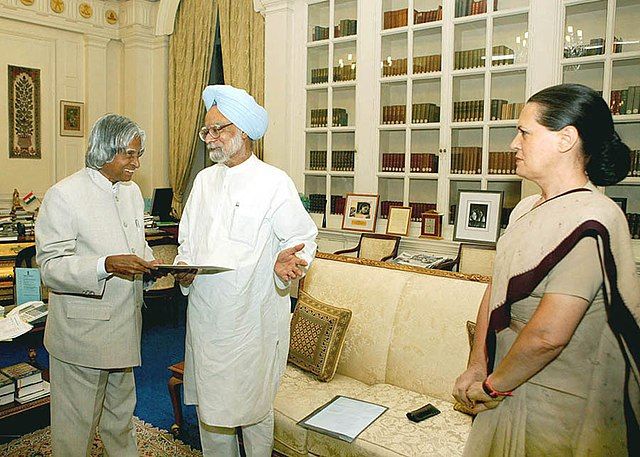
Manmohan Singh with Abdul Kalam and Sonia Gandhi

Singh, who had thus far been one of the most influential architects of India’s socialist economy, eliminated the permit raj, reduced state control of the economy, and reduced import taxes.

In praise of Singh’s work that pushed India towards a market economy, long-time Cabinet minister P. Chidambaram has compared Singh’s role in India’s reforms to Deng Xiaoping’s in China.

During the 1970s and 1980s, Singh held several key posts in the Government of India, such as Chief Economic Advisor (1972–1976), governor of the Reserve Bank (1982–1985) and head of the Planning Commission (1985–1987).