Sam Pitroda

Sam Pitroda is the Father of Digital India. In 1987 during his tenure as advisor to Prime Minister Rajiv Gandhi, Pitroda headed six technology missions related to telecommunications, water, literacy, immunization, dairy, and oilseeds. He spent nearly a decade with Prime Minister Rajiv Gandhi as the leader of an effort to build an Indian information industry.

Dreaming Big

Satyanarayan Gangaram Pitroda born 17 November 1942, also known as Sam Pitroda is an Indian telecommunication engineer, and entrepreneur. He is the chairman of Indian Overseas Congress. He was born in Titlagarh.

He was also an advisor to, Prime Minister (then) Dr. Manmohan Singh’s tenure and for United Nations.

He obtained a master’s degree in electrical engineering from the Illinois Institute of Technology in Chicago. In 1966 he went to work for GTE in Chicago. He is regarded as one of the earliest pioneers of hand-held computing because he invented the Electronic Diary in 1975.

In 1984, Pitroda was invited to return to India by the Prime Minister Indira Gandhi. On his return, he started the Center for Development of Telematics C-DOT, an autonomous telecom R&D organization.

Digvijaya Singh of INC

Digvijaya Singh born 28 February 1947 is an Indian politician and a Member of Parliament in the Rajya Sabha.

He is Ex-General Secretary of the Indian National Congress party’s All India Congress Committee. Previously, he had served as the 14th Chief Minister of Madhya Pradesh, a central Indian state, for two terms from 1993 to 2003.

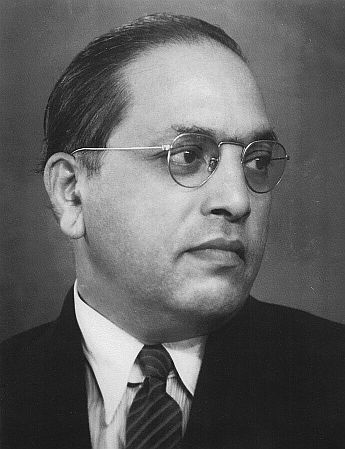
B. R. Ambedkar

Bhimrao Ramji Ambedkar 14 April 1891 – 6 December 1956 was an Indian jurist, economist, social reformer and political leader who headed the committee drafting the Constitution of India from the Constituent Assembly debates.

After graduating from Elphinstone College, University of Bombay, Ambedkar studied economics at Columbia University and the London School of Economics, receiving doctorates in 1927 and 1923, respectively, and was among a handful of Indian students to have done so at either institution in the 1920s.

Pandit Jawaharlal Nehru

Jawaharlal Nehru promoted parliamentary democracy, secularism, science and technology during the 1950s; powerfully influencing India as a modern nation. In international affairs, he steered India clear of the two blocs of the Cold War.

Nehru with members of the Interim government faction leaving Viceroy’s House after swearing in on 2 September 1946

India an Ancient Secular Democracy

India an Ancient Secular Democracy

Books of Pandit Jawaharlal Nehru

Rajiv Gandhi the Dynamic Leader

Import Substitution and indigenous Manufacturing got the first big boost due to the Economic Reforms of Rajiv Gandhi. Made in India was born.

The Make in India dream of Vivekananda began to materialize; many joint ventures and healthy collaborations created employment and skill development

It was a phase of Phenomenal National development without jeopardizing National Security or exposing our Financial Infrastructure.

Rajiv Gandhi – Rajiv Gandhi Foundation

Books, video, audio, and other resources about Shri Rajiv Gandhi, 6th Prime Minister of India. From the Rajiv Gandhi Foundation.

Indira Gandhi

Indira Gandhi was a firm and compassionate leader. India’s stature rose to an all-time high internationally during her tenure. The best PM in Indian History. She was and is the cause of much of the positive progress we see in India Today.

Letters From A Father To His Daughter – THESE LETTERS were written to my daughter Indira in the summer of 1928 when she was in the Himalayas at Mussoorie and I was in the plains below. They were personal letters addressed to a little girl, ten years of age.

But friends, whose advice I value, have seen some virtue in them, and have suggested that I might place them before a wider audience. I do not know if other boys and girls will appreciate them. But I hope that such of them as read these letters may gradually begin to think of this world of ours as a large family of nations. ….

ALLAHABAD November 1929

Jawaharlal Nehru

Manmohan Singh of INC

Manmohan Singh born 26 September 1932 is an Indian retired politician, economist, academician and bureaucrat who served as the 13th Prime Minister of India from 2004 to 2014.

A member of the Indian National Congress, Singh was the first Sikh prime minister of India. He was also the first prime minister since Jawaharlal Nehru to be re-elected after completing a full five-year term. He is the third longest-serving prime minister after Jawaharlal Nehru and Indira Gandhi.

Manmohan Singh with Abdul Kalam and Sonia Gandhi

Singh, who had thus far been one of the most influential architects of India’s socialist economy, eliminated the permit raj, reduced state control of the economy, and reduced import taxes.

In praise of Singh’s work that pushed India towards a market economy, long-time Cabinet minister P. Chidambaram has compared Singh’s role in India’s reforms to Deng Xiaoping’s in China.

During the 1970s and 1980s, Singh held several key posts in the Government of India, such as Chief Economic Advisor (1972–1976), governor of the Reserve Bank (1982–1985) and head of the Planning Commission (1985–1987).

Mahatma Gandhi

Mahatma Gandhi helped create a democratic and secular India and made Indians free citizens of the world. Let us all work towards making India a Free Secular Democracy again and not fall into the abyss of religion-based politics.

Mahatma Gandhi and Nehru

Ahimsa Paramo Dharma

Ahimsa Paramo Dharma

Gandhi Jayanti is celebrated every year on 2 October to mark the birthday of Mahatma Gandhi and is one of the three national holidays of India. The UN General Assembly announced on 15 June 2007 that it adopted a resolution which declared that 2 October will be celebrated as the International Day of Non-Violence as he was a non-violent freedom fighter.

He is also known as the “Father of The Nation” and this title was given to him by Subhas Chandra Bose for his relentless struggles for independence. More Books Here – Gandhi Bhavan Collection